What Cats Say With Their Tails, Ears and Eyes
Dogs broadcast. Cats understate. A dog crossing a room announces its mood to everyone present; a cat delivers the same information in a tail angle and an ear rotation, and expects you to have been paying attention.
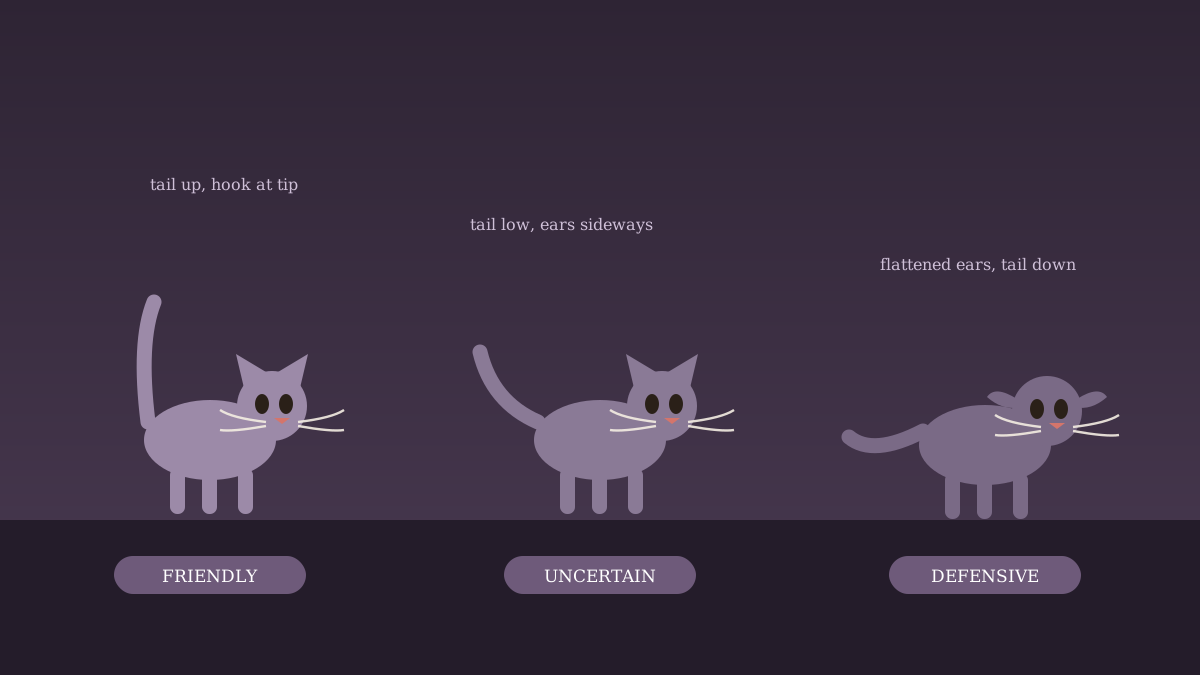
The tail is the headline
A tail carried straight up is the clearest friendly signal a cat gives — the greeting kittens use with their mother and adults reserve for company they like. A gentle question-mark curve at the tip adds a note of playful interest. A tail wrapped tightly around the body when sitting means the cat has closed the conversation, and a low, bristling tail with an arched back is a cat trying to look larger than it is.
Then there is the twitch. A tip flicking side to side while everything else looks calm is a cat losing patience. That flick is the reason so many people report being bitten "without warning" during petting: the warning was issued, several seconds earlier, at the far end of the animal.
Ears rotate like radar
Forward and upright means interest. Swivelled sideways and back means uncertainty. Flattened hard against the skull — the "airplane ears" of cat photography — means fear or imminent defence, and is a clear instruction to stop whatever is happening. Because ears move independently, a cat can attend to you with one and to a noise behind it with the other, which is worth remembering before assuming you have its full attention.
Eyes: pupils and blinks
Wide pupils in normal light indicate arousal — excitement, fear or hunting focus. Narrow slits in dim light suggest tension rather than relaxation. The famous slow blink works in the other direction: a long, lazy closing of the eyes is a cat saying it feels safe. Returning it slowly is one of the few gestures that reliably makes a nervous cat more comfortable.
Purring is not simply happiness
Cats purr when content, but also when injured, frightened or seeking care. It appears to function as a self-soothing and solicitation signal rather than a pure emotion display. Read purring alongside posture rather than treating it as proof that everything is fine.
Petting has a map
Most cats accept contact readily around the cheeks, chin and base of the ears, where scent glands are concentrated. Far fewer enjoy sustained handling of the belly, the base of the tail or the back legs. A useful test: pet for three seconds, then stop and remove your hand. A cat that pushes back into it is asking for more. One that stays still or looks away has finished, and continuing is how people teach cats to bite.
The signals people misread most often
Three misreadings account for most of the trouble between people and cats.
The first is the exposed belly. A cat rolling over is showing trust, not requesting a belly rub; the position leaves all four sets of claws available, and hands that arrive are frequently caught. Trust is the message. Touching is a separate question, and the answer is usually the chin or the cheek.
The second is the purr. Cats purr while content, but also while injured, while giving birth and at the veterinarian. It appears to be a self-soothing behaviour as much as a social one, so a purring cat that is otherwise tense, still and dilated is not telling you it is happy.
The third is the tail tip. A cat lying apparently relaxed with only the last few centimetres of tail flicking is not relaxed at all. That flick is the earliest sign of building irritation, and it usually appears several seconds before the paw does. In practice, the tail tip is the most useful early-warning system a cat owner has.
Frequently Asked Questions
What does an upright tail mean?
A tail held vertically, often with a small hook at the tip, is a friendly greeting. Cats use it to approach individuals they trust, including people.
What is the slow blink?
A deliberate, unhurried closing and opening of the eyes. It signals that a cat is relaxed and non-threatening, and cats often return it when a person does it first.
Why does my cat's tail twitch when it seems calm?
A twitching or thumping tail tip usually means growing irritation or intense concentration. It is often the last warning before a cat moves away or swats.
Why does my cat bite me during stroking?
Usually because a signal arrived first and was missed: skin twitching, tail tip flicking, ears rotating back, the head turning towards your hand. Petting-induced overstimulation is common. Short sessions, and stopping while the cat is still enjoying it, largely prevent it.
Do cats understand a slow blink?
Studies on human–cat communication suggest cats are more likely to approach a person who slow-blinks at them, and often blink back. It is one of the few feline signals a person can produce convincingly, and it costs nothing to try.
Sources & Further Reading
- International Cat Care — icatcare.org
- American Association of Feline Practitioners — catvets.com
Last updated: 7 August 2026