Play Is Hunting: Getting the Wand Toy Right
A cat that ignores its toy basket is not bored of play. It is bored of toys that behave like objects. Feline play follows the shape of a hunt, and anything that does not fit that shape gets one glance and no second look.
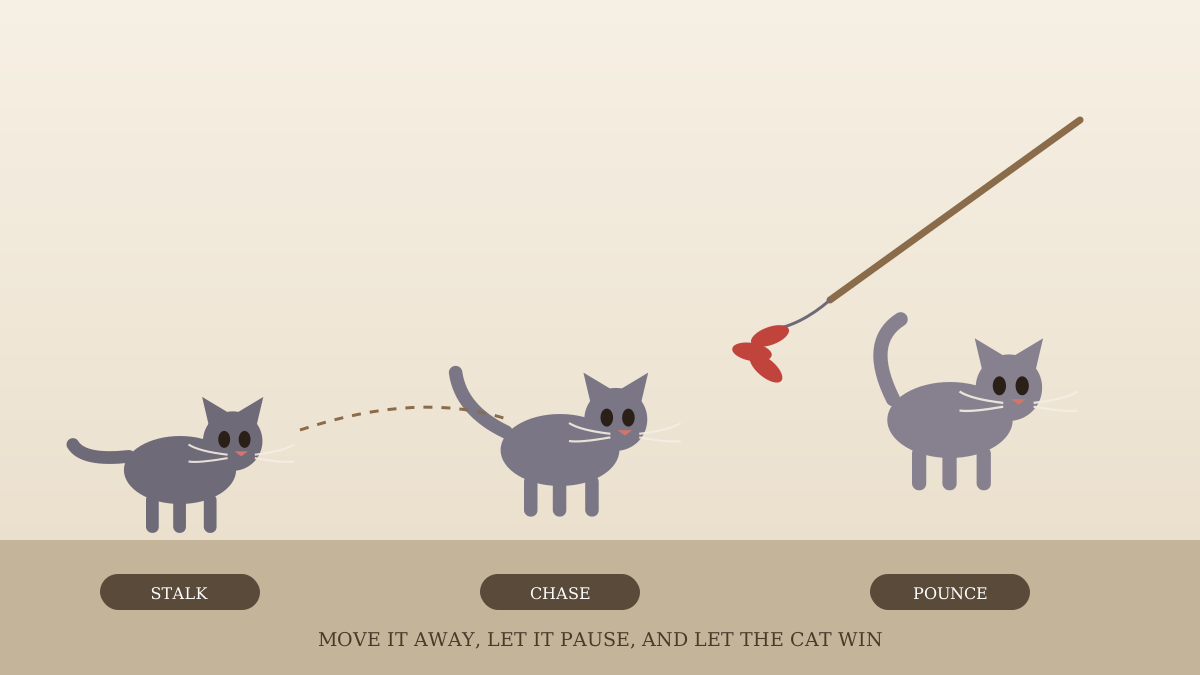
The sequence
A hunt runs in stages: spot, stalk, chase, pounce, catch and secure, and finally a pause before the next round. Play is the same sequence with the ending removed. When a session leaves a cat unsatisfied, it is almost always because one of those stages was skipped — usually the catch.
Move the toy like prey, not like a toy
Prey does not fly at a predator's face. It scurries, freezes, changes direction and tries to disappear behind something. Drag a wand toy away from the cat, let it vanish under a cushion, twitch it, then stop dead. The stillness is what triggers the stalk. Waving a feather back and forth in front of a cat's nose produces exactly the blank stare most owners have seen.
Let the cat win
End every session by letting the cat catch and hold the toy — grab it, bite it, rabbit-kick it. That completion is what closes the loop. Following it with a small meal mirrors the natural hunt-eat-groom-sleep sequence, and it is why evening play often produces a cat that sleeps through the night instead of racing the corridor at four in the morning.
Hands are not toys
Playing with fingers teaches a cat that human skin is a legitimate target, and a kitten that learns it is charming at eight weeks and a problem at eight months. Keep a barrier — wand, rod, thrown toy — between hands and teeth from the first day. If a cat does latch on, going still and boring works better than pulling away, which imitates fleeing prey.
Solo play has limits
Puzzle feeders, treat balls and rolling toys are genuinely useful for the parts of the day nobody is home, and hiding portions of the daily food around the house makes a cat hunt for it. But no self-operating toy reproduces the unpredictability of something being moved by a person paying attention. Ten minutes of wand play is worth more than a cupboard of gadgets.
Why laser pointers cause problems, and how to use one anyway
A laser dot runs the hunting sequence perfectly up to the final step and then removes it. The cat stalks, chases and pounces, and catches nothing, because there is nothing to catch. For many cats that is merely unsatisfying. For some it produces persistent searching afterwards — staring at walls, chasing reflections, checking the spot where the dot vanished.
If you use one, end every session by landing the dot on a physical toy and letting the cat catch that. The sequence then completes on an object the cat can hold, bite and carry off, which is what the behaviour is for. Better still, keep the laser for warm-up and do the real session with a wand toy, which lets the cat catch something several times inside the same game.
The same principle applies to any interactive toy: whatever the cat has been chasing must, at some point, be caught. A hunt that never ends is not enrichment.
Frequently Asked Questions
Why does my cat ignore expensive toys?
Most toys sit still. A cat responds to movement that imitates prey — erratic, pausing, moving away rather than towards the cat.
Should play always end with a catch?
Yes. Letting the cat catch and hold the toy completes the hunting sequence. Play that ends with the toy snatched away can leave a cat frustrated.
How long should a play session be?
Short and frequent works better than long and rare. Several sessions of a few minutes, especially around dusk, suit a cat's natural activity peaks.
How many play sessions does a cat need each day?
Two to four short sessions of five to ten minutes suits most indoor adult cats, spaced through the day rather than bunched together. Cats hunt in short bursts; one long session does not match how the behaviour is built.
My cat ignores every toy I buy. Why?
Usually because the toy moves the wrong way. Cats respond to movement that goes away from them, hides, and pauses — not to a toy waved in the face. Try dragging it out of sight around a corner and stopping. Movement pattern matters more than the toy.
Sources & Further Reading
- ASPCA — cat behaviour resources — www.aspca.org
- Cats Protection — behaviour and play advice — www.cats.org.uk
Last updated: 7 August 2026